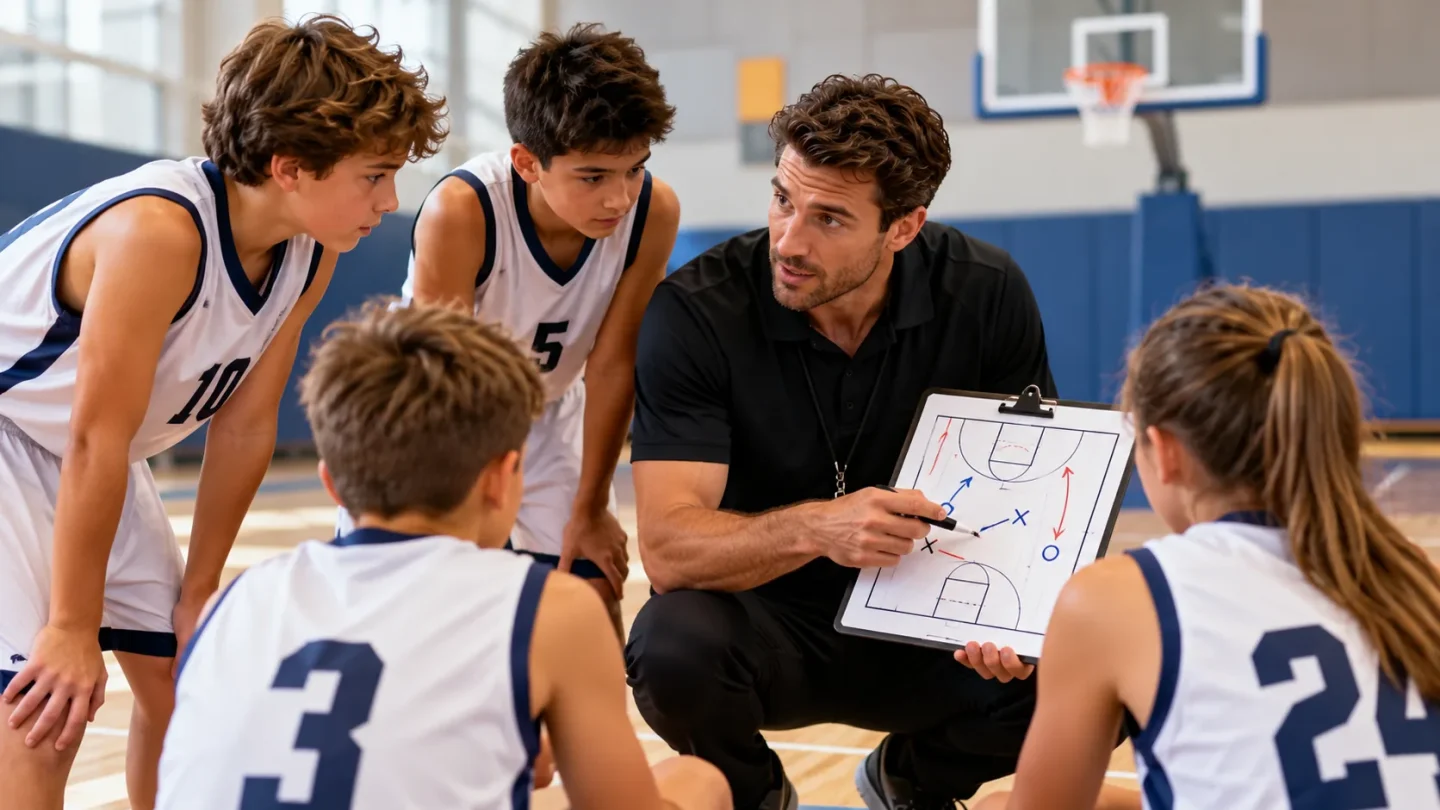
Simple baseline and sideline basketball plays for young teams
Every youth basketball coach has experienced this moment.
Your team earns possession under the basket. The referee hands your player the ball. Four teammates run around trying to get open, defenders crowd the passing lanes, and suddenly everyone starts panicking.
Five seconds can feel incredibly short when nobody knows where to go.
The good news? You do not need a complicated playbook to solve this problem.
The best youth basketball inbound plays are simple, easy to remember, and flexible enough to work when defenders react differently than expected.
In this guide, you will learn five beginner-friendly inbound plays, how to teach them during practice, and what to do when the first passing option is unavailable.
Why Inbound Plays Matter in Youth Basketball
Inbound plays are sometimes overlooked during youth practices.
Coaches spend time on dribbling, shooting, defense, and passing, but forget to practice what happens when their team must restart play from the sideline or baseline.
This creates avoidable problems during games.
Players may bunch together, stand still, throw risky passes, or fail to recognize an open teammate.
A simple inbound system helps young players:
- Understand their responsibilities.
- Create passing angles.
- Move without the basketball.
- Recognize defensive pressure.
- Avoid unnecessary turnovers.
- Communicate with teammates.
An inbound play should not always be designed to create an immediate basket.
Sometimes the best result is simply getting the basketball safely into play and beginning your regular offense.
Important: Check your league’s rules on throw-in locations, five-second counts, screening, and defender positioning. Youth competition rules can differ.
1. The Box Inbound Play
Best for: Beginners learning their first baseline inbound play.
The Box is a useful introduction to baseline out-of-bounds basketball because players begin in an organized formation.
Setup
Position four offensive players in a box shape near the lane.
Two players begin near the elbows, while two others start near the low blocks.
The fifth player stands out of bounds on the baseline with the basketball.
Make sure players have enough space to move safely and avoid crowding one another.
How It Works
- The inbounder calls the play.
- One player near the low block cuts toward an open area on the opposite side of the lane.
- Another player moves toward the basket or an open passing window.
- A player near the elbow moves toward a safe outlet position.
- The inbounder reads the defense and passes to the teammate with the clearest opportunity.
The primary goal is a safe pass. A close-range scoring opportunity is a bonus.
Coaching Tips
Teach players to move with purpose instead of running randomly.
Remind the inbounder to look at all available teammates rather than staring at one target.
Practice the movement slowly before introducing defenders.
Simple coaching cue: “Cut hard, show your hands, find the open space.”
2. The Screen-and-Cut Baseline Play
Best for: Teaching players how to use a legal screen to get open.
This play introduces a fundamental offensive skill: creating space for a teammate.
Setup
Place two teammates near the lane, one near the opposite block and another near the free-throw line area.
Position the remaining two players outside the lane to provide additional passing options.
The inbounder begins under the basket.
How It Works
- The designated screener moves into position and establishes a legal, stationary screen.
- A teammate cuts off the screen toward the basket.
- The inbounder looks for the cutter if the passing lane is open.
- If the cutter is covered, the inbounder passes to the safety outlet.
- The team transitions into its normal offense.
Coaching Tips
Young players often misunderstand screening.
A screen is not pushing, holding, or moving into a defender.
Teach the screener to establish a legal position and remain stationary at contact. Explain that a defender’s movement and whether the screen is in or outside their field of vision affect the space and time required by the applicable rules.
The cutter should move close enough to use the screen effectively without colliding with the screener.
Simple coaching cue: “Set the screen, cut with purpose, make the easy pass.”
3. The Stack Inbound Play
Best for: Helping young teams learn coordinated movement.
The Stack uses a simple starting formation that is easy for youth players to recognize.
Setup
Four offensive players line up in a vertical stack near the lane, with appropriate spacing.
The inbounder stands outside the baseline.
Assign each player a specific movement before beginning.
How It Works
When the inbounder gives a signal:
- The first player cuts toward the near corner.
- The second player cuts toward the basket.
- The third player moves toward the opposite wing.
- The fourth player steps into a safe outlet area.
- The inbounder chooses the clearest passing option.
The movements should occur in an organized sequence rather than everyone sprinting in different directions at once.
Why It Works for Beginners
A familiar formation reduces confusion.
Players learn where to start, when to move, and where to look for the basketball.
However, the play should not become a memorized routine that ignores defenders.
Encourage players to recognize open space and adapt.
Common Mistake
Several players cut into the same area.
When that happens, defenders can cover multiple passing options.
During practice, pause and ask:
“Could one defender guard two of our players because we were too close together?”
This turns spacing mistakes into teaching opportunities.
4. The Sideline Safety Play
Best for: Getting the basketball safely into play under pressure.
Not every inbound play should attempt to score.
Sometimes your team simply needs possession.
The Sideline Safety Play focuses on clear movement and reliable passing options.
Setup
Position the inbounder outside the sideline at the designated throw-in spot.
Place two players closer to the inbounder and two farther toward the offensive half of the court.
Avoid clustering all four teammates around the basketball.
How It Works
- One nearby player cuts away from the basketball.
- Another cuts toward an open receiving area.
- A third player stays available as a secondary passing option.
- The fourth player maintains spacing farther from the sideline.
- The inbounder makes a controlled pass to the safest available target.
If the first option is covered, the inbounder immediately looks for the secondary receiver.
After receiving the pass, that player should protect the ball, establish balance, and look for the next action.
Coaching Tips
Teach players not to rely entirely on one designated ball handler.
Every young player should develop the ability to catch, pivot, protect the basketball, and make a simple pass.
Simple coaching cue: “Get open, catch strong, protect the ball.”
5. The Fake-Cut Inbound Play
Best for: Developing movement, timing, and defensive awareness.
Young defenders often follow the first movement they see.
A controlled change of direction can help an offensive player create separation.
Setup
Use a basic baseline or sideline formation with one primary receiver, two supporting players, and one safety outlet.
The inbounder watches the defender guarding the primary receiver.
How It Works
- The primary receiver takes a couple of controlled steps away from the intended receiving area.
- The player plants and changes direction.
- The receiver moves into an open passing lane.
- The inbounder passes when the receiver has created separation.
- If the defender stays in position, the inbounder uses another passing option.
The receiver does not need a dramatic fake.
A simple change of pace and direction is often easier for beginners to execute.
Coaching Tips
Do not encourage players to push defenders away.
Teach footwork, timing, and legal movement.
The best inbound opportunities often come from reading the defender rather than performing a complicated sequence.
Simple coaching cue: “Move the defender, then attack the space.”
Quick Comparison: Which Inbound Play Should You Use?
| Inbound Play | Main Purpose | Difficulty |
|---|---|---|
| Box Play | Organized baseline movement | Beginner |
| Screen-and-Cut | Create a passing lane near the basket | Intermediate |
| Stack Play | Coordinated cutting and spacing | Beginner |
| Sideline Safety | Protect possession against pressure | Beginner |
| Fake-Cut Play | Create separation from a defender | Beginner–Intermediate |
For a new team, start with the Sideline Safety Play and one baseline play.
Once those are reliable, introduce additional options.
How to Teach Inbound Plays in 10 Minutes
Coaches do not need to spend half of practice installing inbound sets.
A short teaching sequence can work well.
Minutes 0–2: Explain the Formation
Show players where to stand.
Use floor markings or cones to clarify starting positions.
Explain the primary receiving option and the safety outlet.
Minutes 2–4: Walk Through the Movement
Practice without defenders.
Let players move slowly while learning the sequence.
Switch roles so different players experience being the inbounder, cutter, and outlet.
Minutes 4–6: Add Passive Defenders
Introduce defenders who provide light pressure without aggressively challenging every pass.
Ask offensive players to identify open passing lanes.
Minutes 6–8: Play Live
Allow defenders to contest passes legally.
Challenge the offense to get the ball into play safely.
If the primary option disappears, players must recognize an alternative.
Minutes 8–10: Review and Repeat
Finish with a few realistic game situations.
Ask players:
- Who was your first passing option?
- Where was the safety outlet?
- What should you do if your defender takes away the cut?
Keep the explanations short.
The objective is to develop recognition and confidence.
5 Common Youth Basketball Inbound Mistakes
1. Everyone Runs Toward the Ball
This allows defenders to crowd the passing area.
Teach players to occupy different spaces.
2. The Inbounder Watches Only One Teammate
Defenders may anticipate the pass.
Encourage the inbounder to scan the court and recognize the safest option.
3. Players Forget the Safety Outlet
A baseline scoring play is not useful if the team cannot get the ball inbounds.
Every inbound system should include a reliable backup option.
4. Coaches Teach Too Many Plays
A team that knows eight plays poorly may struggle more than a team that understands two plays well.
Build consistency before adding complexity.
5. Players Never Practice Against Pressure
An unguarded walkthrough is useful for learning positions, but real defenders create different problems.
Progress gradually from walkthroughs to live defensive pressure.
How to Adjust Inbound Plays by Age
Ages 6–8
Emphasize safe passing, getting open, catching, and simple movement.
Use one or two easy options rather than complex formations.
Ages 9–11
Introduce structured formations, changes of direction, safety outlets, and simple legal screens when players are ready.
Encourage players to recognize defensive positioning.
Ages 12–14
Add more detailed timing, counters, and defensive reads.
Players can begin understanding how to adjust an inbound play when the defense denies the first option.
These age ranges are general coaching suggestions. Choose the level of difficulty based on the actual experience and readiness of your players.
Frequently Asked Questions
What is the easiest inbound play for youth basketball?
The Sideline Safety Play is a good starting point because it focuses on getting open and making a controlled pass. For baseline situations, the Box Play offers a straightforward formation.
How many inbound plays should a youth team know?
For beginners, one reliable sideline play and one reliable baseline play can be enough. Additional plays can be introduced as players become comfortable with the fundamentals.
Should youth teams use screens on inbound plays?
Yes, when players are ready to understand and execute legal screening technique. Begin without contact, then introduce realistic defensive situations gradually.
What happens if no teammate gets open?
Players should keep moving into useful passing windows without crowding. The inbounder should look for a safe outlet rather than forcing a dangerous pass. If permitted and available, a timeout may be an option before a five-second violation occurs. The available options depend on the league’s rules and game situation.
Are inbound plays more important than basic basketball skills?
No. Passing, catching, spacing, footwork, and decision-making are the foundation. An inbound play organizes those skills into a specific game situation.
Final Thoughts: Keep Inbound Basketball Simple
The best youth basketball inbound plays are not necessarily the most complicated.
They are the plays your players understand, remember, and can execute when defenders apply pressure.
Begin with simple formations.
Teach players to create space, recognize passing lanes, and use safety outlets.
Introduce defenders gradually.
Most importantly, help young athletes understand why the movement works rather than memorizing every step without thinking.
A great inbound play does more than restart possession.
It teaches players how to communicate, move without the ball, and make better decisions together.
Start with one play. Practice it consistently. Build from there.
